Digital Marketing: The Key to Growing Your Business Online
In today’s digital world, having a strong online presence is no longer optional for businesses. People use search engines, social media platforms, websites, and online marketplaces every day to discover products and services. As customer behavior continues to shift toward digital channels, businesses need effective ways to reach their target audience where they spend their time. This is where digital marketing plays an important role.
Digital marketing is one of the most effective ways for businesses to build brand awareness, attract potential customers, generate leads, and increase sales. Whether you are running a small local business, an e-commerce store, a startup, or an established company, a well-planned digital marketing strategy can help you compete in an increasingly connected marketplace.
What Is Digital Marketing?
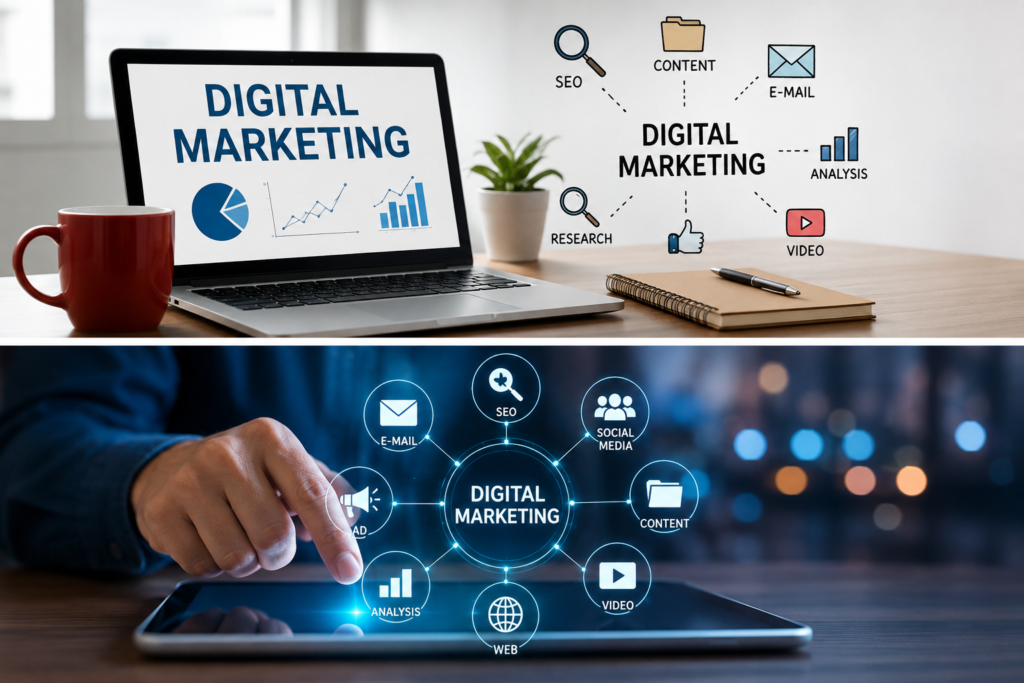
Digital marketing refers to the promotion of products, services, or brands through digital channels. These channels include search engines, social media, websites, email, online advertisements, and other internet-based platforms.
Traditional marketing methods such as newspapers, television, radio, and printed advertisements can still be useful. However, digital marketing provides businesses with additional opportunities to reach specific audiences and measure their marketing performance.
For example, a business can use Search Engine Optimization (SEO) to attract people searching for relevant information, run Google Ads to reach customers with specific search intent, use social media to build a community, and use email marketing to maintain relationships with existing customers.
Why Is Digital Marketing Important?
The internet has changed how consumers research and make purchasing decisions. Before buying a product or service, many customers search online, compare different options, read reviews, visit websites, and check social media profiles.
A strong digital marketing strategy helps businesses become visible throughout this customer journey.
1. Reach the Right Audience
One of the biggest advantages of digital marketing is audience targeting. Businesses can reach people based on factors such as location, interests, demographics, online behavior, and search intent.
For example, a local fitness centre can target people searching for gym memberships or personal training in a specific area. This makes marketing efforts more relevant and can improve the chances of attracting potential customers.
2. Build Brand Awareness
A business needs to be visible before customers can consider buying from it. Digital marketing allows brands to appear across multiple online channels.
Regular social media content, useful blog posts, search engine visibility, videos, and online advertisements can help customers become familiar with a brand. Over time, consistent communication can improve brand recognition and trust.
3. Generate Leads and Sales
Digital marketing is not only about increasing visibility. It can also support business growth by generating leads and driving conversions.
Businesses can encourage visitors to fill out contact forms, request quotations, book appointments, sign up for free trials, download resources, or make purchases directly through their websites.
4. Measure Marketing Performance
Another major benefit of digital marketing is measurability. Businesses can track important metrics such as website traffic, impressions, clicks, engagement, leads, conversions, and advertising costs.
This information helps marketers understand which strategies are performing well and where improvements are required.
5. Cost-Effective Marketing
Digital marketing provides opportunities for businesses with different budgets. A company can start with organic content and gradually invest in paid advertising as its marketing strategy develops.
Instead of spending a large amount on a single traditional advertising campaign, businesses can test different digital campaigns, analyze the results, and optimize their spending.
Major Areas of Digital Marketing
Digital marketing includes several different strategies. Each method has its own purpose, and businesses can combine multiple channels to create a complete marketing strategy.
Search Engine Optimization (SEO)
SEO is the process of improving a website so that it can appear more prominently in organic search engine results.
A good SEO strategy involves keyword research, high-quality content, technical optimization, internal linking, website performance, and a positive user experience.
For example, if someone searches for “digital marketing course near me,” a well-optimized website may have an opportunity to appear in the search results for that query.
SEO generally requires consistent effort because search engines continuously evaluate websites and user behavior. However, strong organic visibility can provide long-term value by bringing relevant visitors to a website.
Search Engine Marketing and Paid Advertising
Paid search advertising allows businesses to display advertisements when potential customers search for relevant keywords. Platforms such as Google Ads allow advertisers to create targeted campaigns based on their marketing objectives.
For example, an online education company could advertise courses to people searching for terms related to digital marketing, logistics, or professional training.
Paid advertising can provide faster visibility than organic search, but campaigns need to be carefully managed. Marketers should monitor keywords, ad performance, landing pages, conversion rates, and advertising costs.
Social Media Marketing
Social media has become an important part of digital marketing. Platforms such as Instagram, Facebook, LinkedIn, and YouTube allow businesses to communicate directly with their audiences.
Social media marketing can include educational posts, promotional content, short-form videos, customer testimonials, behind-the-scenes content, and interactive posts.
The goal should not always be to sell immediately. Providing useful and engaging content can help businesses build relationships and create a loyal online community.
Content Marketing
Content marketing focuses on creating and sharing valuable information that is useful to a target audience.
Examples include:
- Blog articles
- Videos
- Infographics
- Guides
- Case studies
- Social media posts
- E-books
- Educational content
Good content can help answer customer questions, demonstrate expertise, improve search visibility, and guide people through the buying process.
For example, a skincare company could publish an article about choosing skincare products for different skin types. A potential customer searching for that information may discover the brand through the blog.
Email Marketing
Email marketing allows businesses to communicate directly with customers and leads.
Businesses can use emails to share newsletters, special offers, product updates, educational content, event announcements, and personalized recommendations.
An effective email strategy focuses on delivering relevant information rather than sending unnecessary promotional messages. Segmentation and personalization can make email communication more useful and engaging.
Influencer Marketing
Influencer marketing involves collaborating with content creators who have an established audience. Depending on the business, influencers can help introduce products or services to specific communities.
The effectiveness of influencer marketing depends on choosing creators whose audience is relevant to the brand. Authenticity and audience trust are often more valuable than simply choosing someone with a large follower count.
How to Create an Effective Digital Marketing Strategy
A successful digital marketing campaign begins with a clear strategy.
Step 1: Identify Your Target Audience
First, understand who your ideal customers are. Consider their needs, interests, problems, location, purchasing behavior, and online habits.
Step 2: Set Clear Goals
Your goals should be specific and measurable. Examples include increasing website traffic, generating leads, improving brand awareness, increasing online sales, or getting more enquiries.
Step 3: Choose the Right Channels
You do not need to use every digital marketing platform. Select channels based on your audience and objectives.
For example, a B2B company may benefit strongly from LinkedIn and SEO, while a fashion brand may focus more heavily on Instagram, video content, and influencer marketing.
Step 4: Create Valuable Content
Content should address the needs and questions of your audience. Instead of focusing only on selling, provide information that helps customers make better decisions.
Step 5: Track and Analyze Results
Use analytics tools to measure campaign performance. Look at traffic, engagement, leads, conversions, and return on investment.
Step 6: Optimize Continuously
Digital marketing is an ongoing process. Test different advertisements, headlines, keywords, content formats, and audiences. Use the results to improve future campaigns.
The Future of Digital Marketing
Digital marketing continues to evolve as technology and consumer behavior change. Artificial intelligence, automation, personalization, video marketing, voice search, and data-driven strategies are influencing the future of online marketing.
Artificial intelligence can help marketers analyze large amounts of data, generate content ideas, automate repetitive tasks, and personalize customer experiences. However, technology should support marketing strategy rather than replace creativity, research, and genuine customer understanding.
Video content is also becoming increasingly important as audiences consume more short-form and long-form videos across different platforms. Businesses that can communicate their value clearly through engaging visual content may have more opportunities to connect with customers.
Common Digital Marketing Mistakes to Avoid
Although digital marketing offers many opportunities, businesses can make mistakes if they do not have a clear strategy.
One common mistake is trying to be active on every platform without understanding where the target audience actually spends time. Another is creating content without a clear purpose or measurable goal.
Businesses should also avoid focusing only on vanity metrics such as follower counts. Engagement, qualified leads, conversions, customer retention, and revenue are often more meaningful indicators of business performance.
Ignoring website experience is another common problem. Even an excellent advertising campaign may perform poorly if visitors arrive at a slow, confusing, or difficult-to-use website.
Conclusion
Digital marketing has transformed the way businesses connect with customers. From SEO and paid advertising to social media, content marketing, email marketing, and influencer campaigns, businesses have many opportunities to build visibility and achieve measurable growth online.
The key to successful digital marketing is not simply using as many platforms as possible. It is about understanding your audience, setting clear goals, choosing the right channels, creating valuable content, measuring results, and continuously improving your strategy.
As the digital landscape continues to change, businesses that adapt to new technologies and customer expectations will be better prepared for long-term success. Whether you are a small business owner, entrepreneur, marketer, or growing brand, investing in digital marketing can help you reach the right people and turn online visibility into meaningful business results.
For More information . Visit : Home